The seventeenth century
As Amsterdam dug canals and created building plots, an old gate became a place to weigh goods and teach anatomy.
The seventeenth-century city changed both outward and inward. The arcs of the canal ring expanded its footprint. Around the Sint Anthoniespoort, parts of the water were covered in 1614 to create a market square. One project opened land for a much larger city, while the other remade a specific corner of it.
The change at Nieuwmarkt is visible in a single building. The old gate gained broad doors and scales for heavy cargo. Upstairs the surgeons’ guild eventually added a domed anatomy theatre. The octagonal tower is the part of that room you can read from the square.
Explore the collection
Search the atlas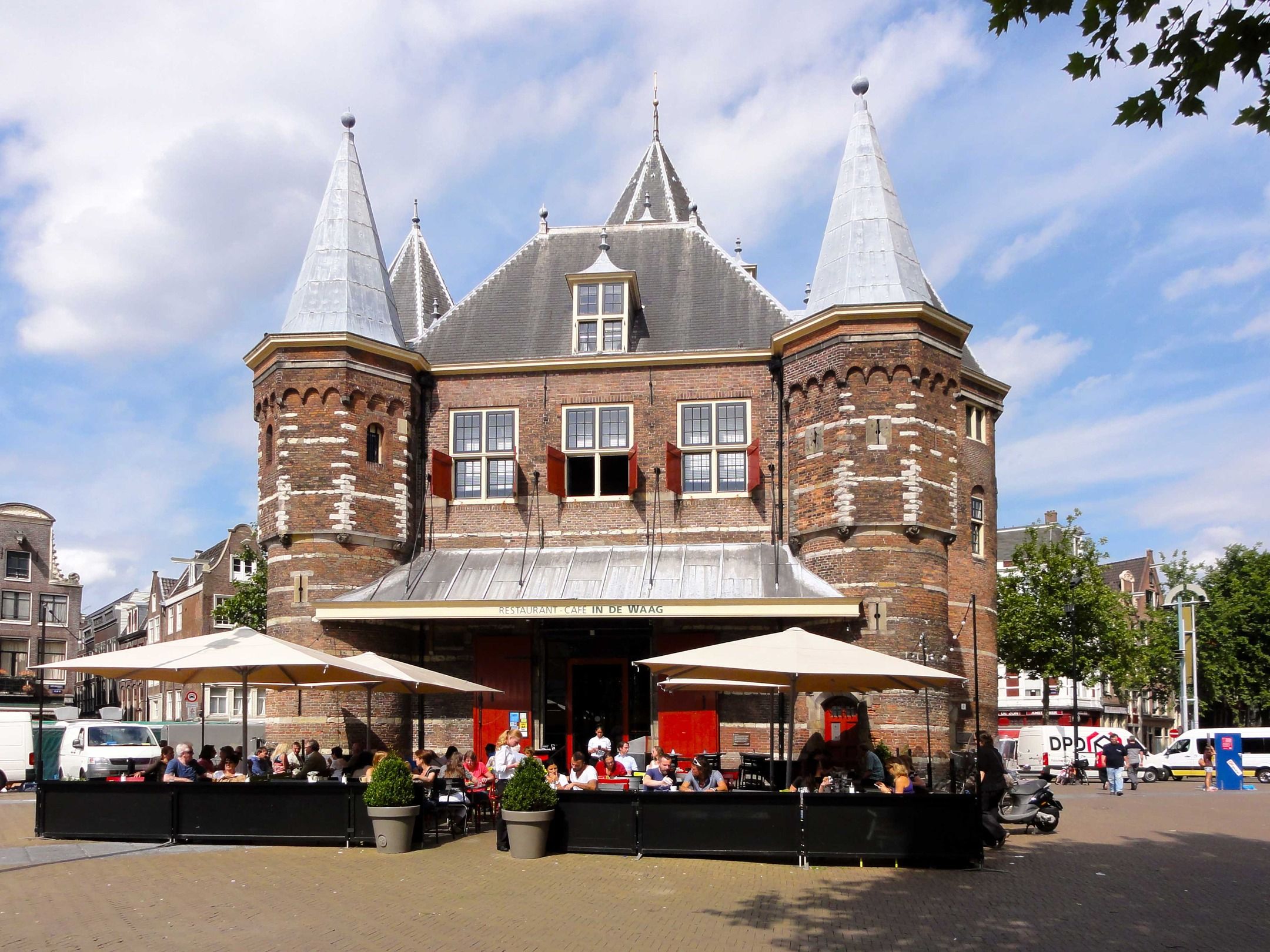
Historic buildings
De Waag, the gate Amsterdam kept
De Waag on Nieuwmarkt began as Amsterdam’s Sint Anthoniespoort city gate. It became a public weigh house in 1617, with guild rooms and an anatomy theatre above the scales.
Bridges & canals
Torensluis and the tower beneath the stones
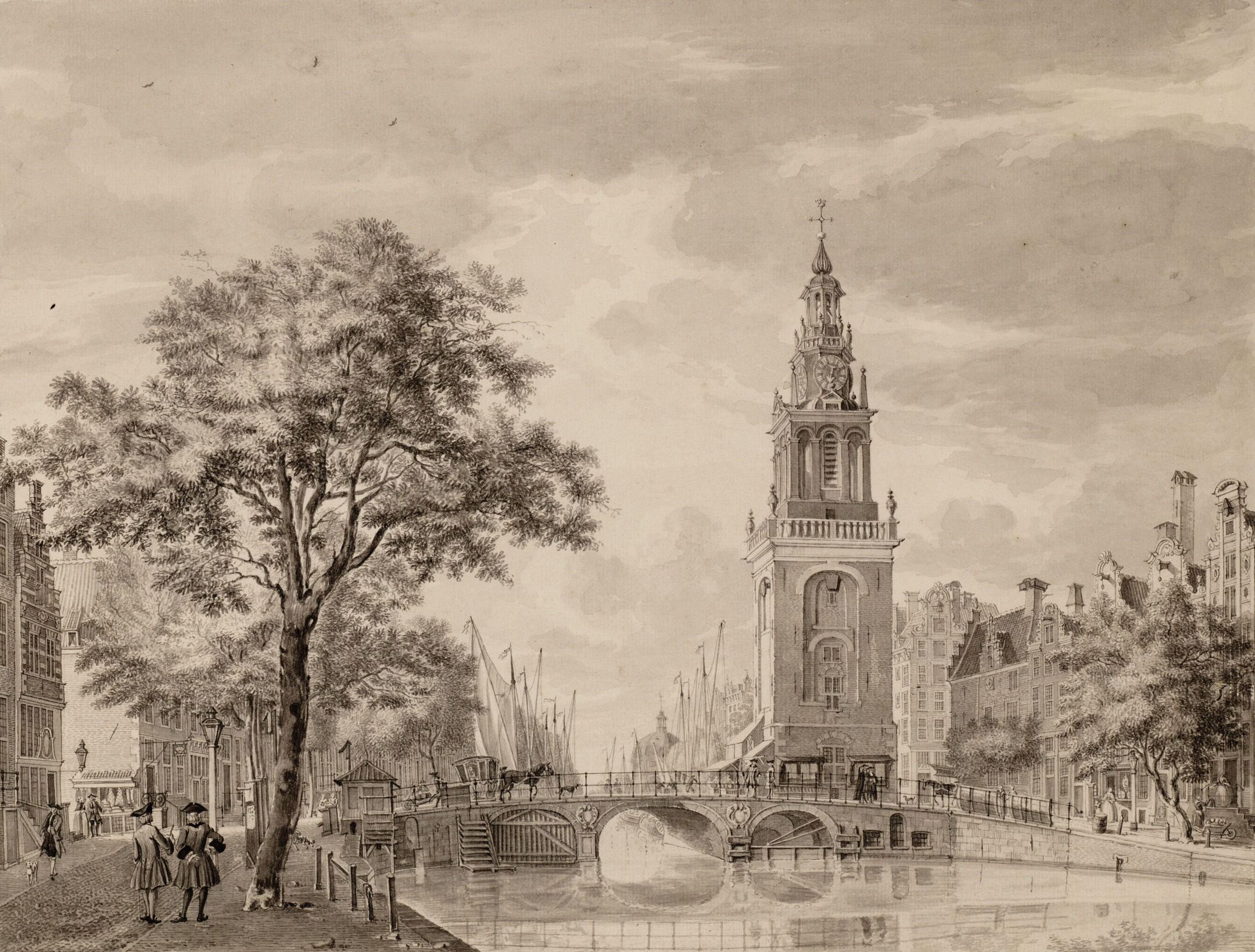
Torensluis is a stone bridge built across Amsterdam’s Singel in 1648. It once held a market above prison cells. The paving marks where the Jan Roodenpoortstoren once stood.
Canal landscapes
How to read a canal bend
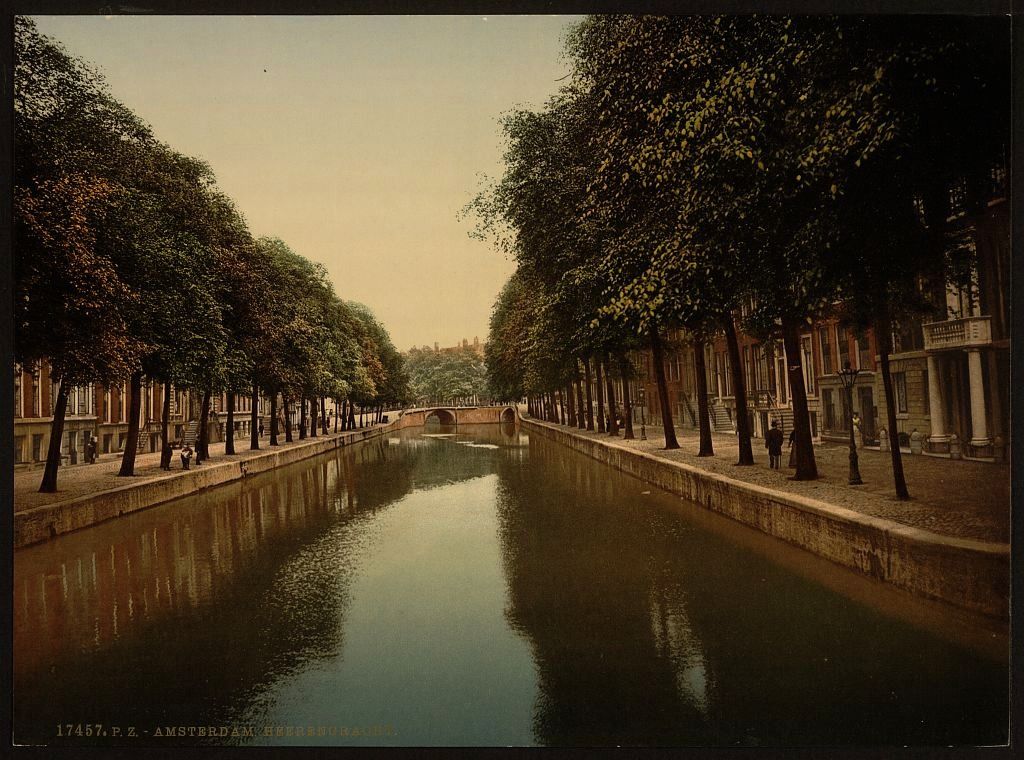
On the Herengracht, a long view between two rows of trees opens onto the plan of a city.
Market life
A gate in the middle of a market
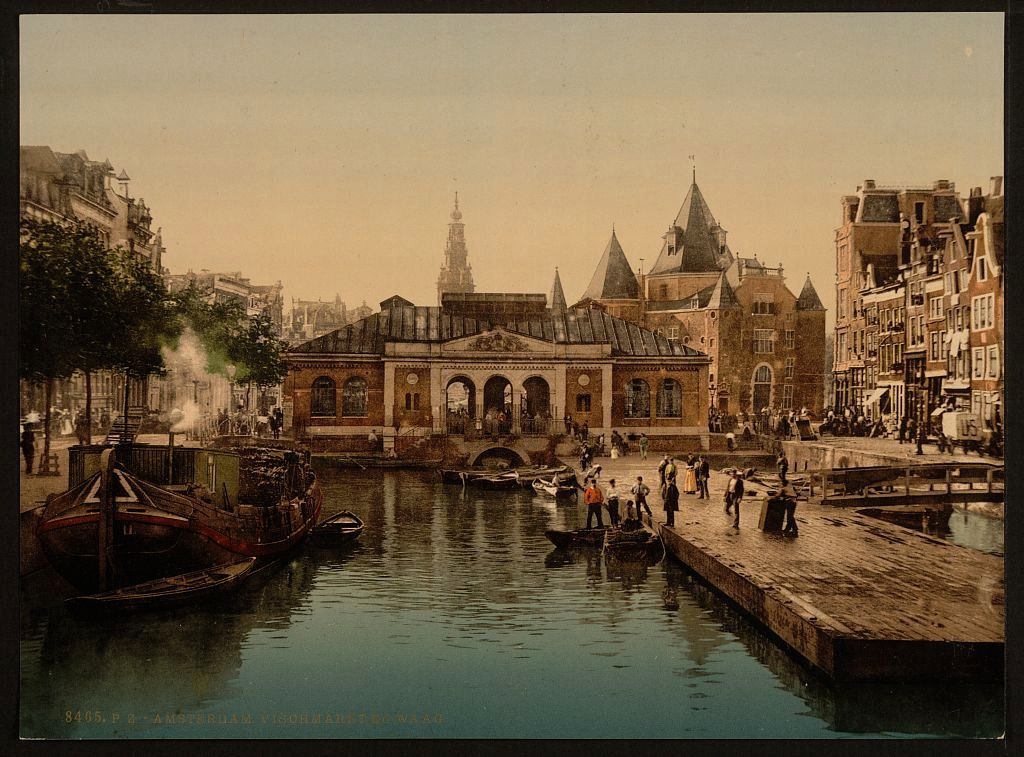
At Nieuwmarkt, the turrets of De Waag remember an edge of Amsterdam that moved away.


