Old centre
Between the Damrak and Nieuwmarkt, former harbour buildings and a city gate reveal where Amsterdam once ended.
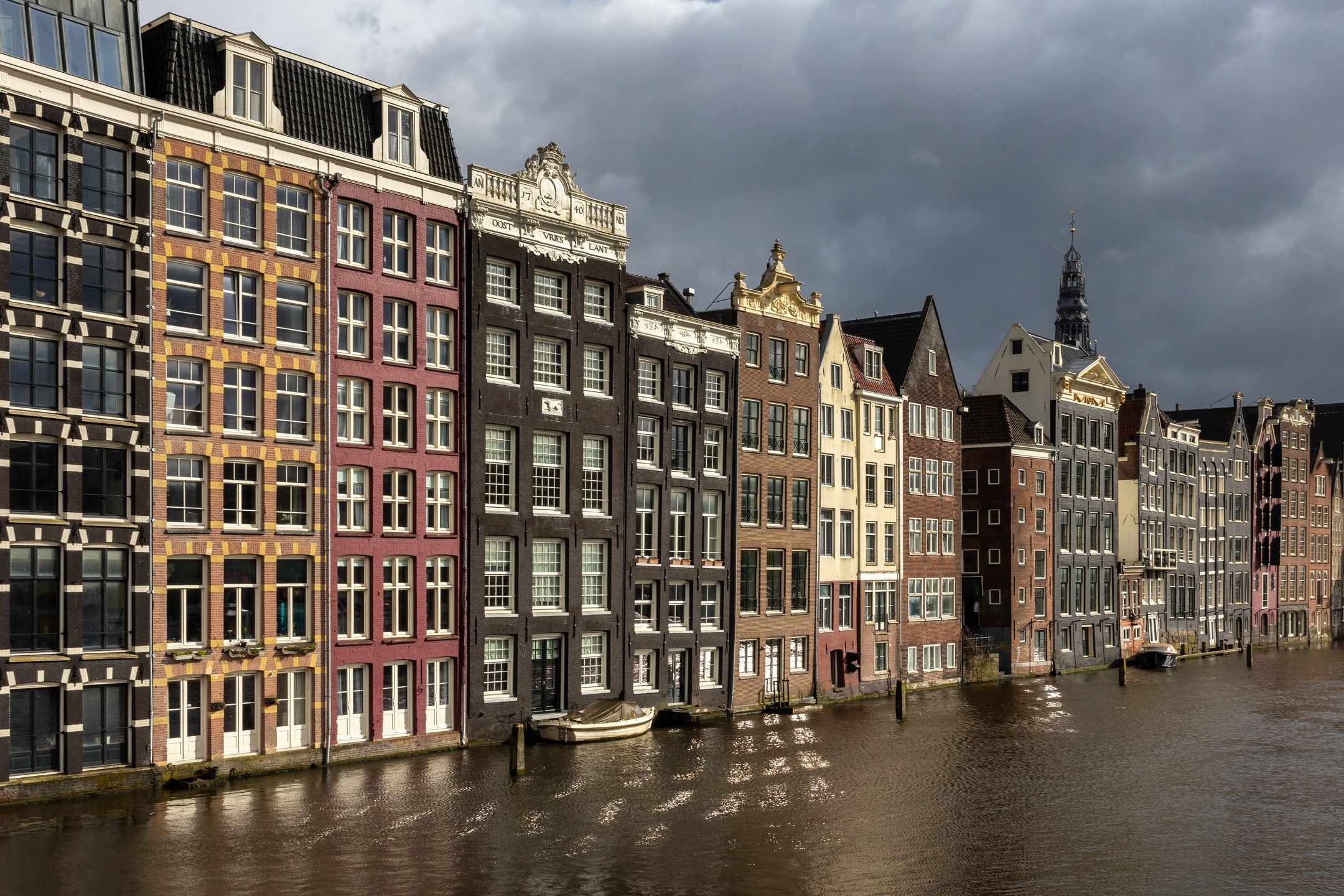
Begin with two views. Along the Damrak, the narrow waterfront houses show their backs to the water. The old harbour connected the IJ to the dam and was a place to move cargo between boats and warehouses. Dwell for a moment on the opposite side of those walls. That is where Warmoesstraat runs.
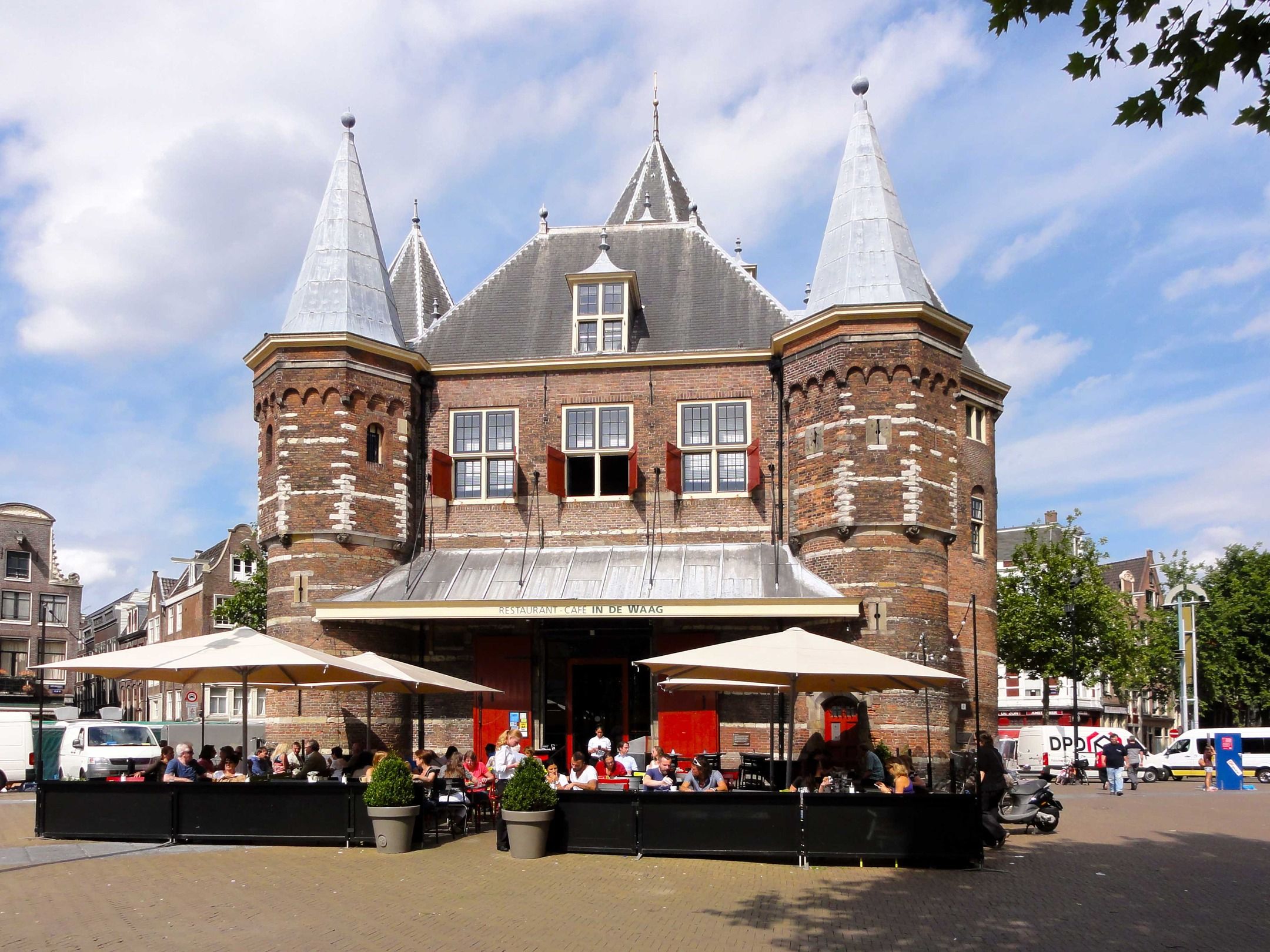
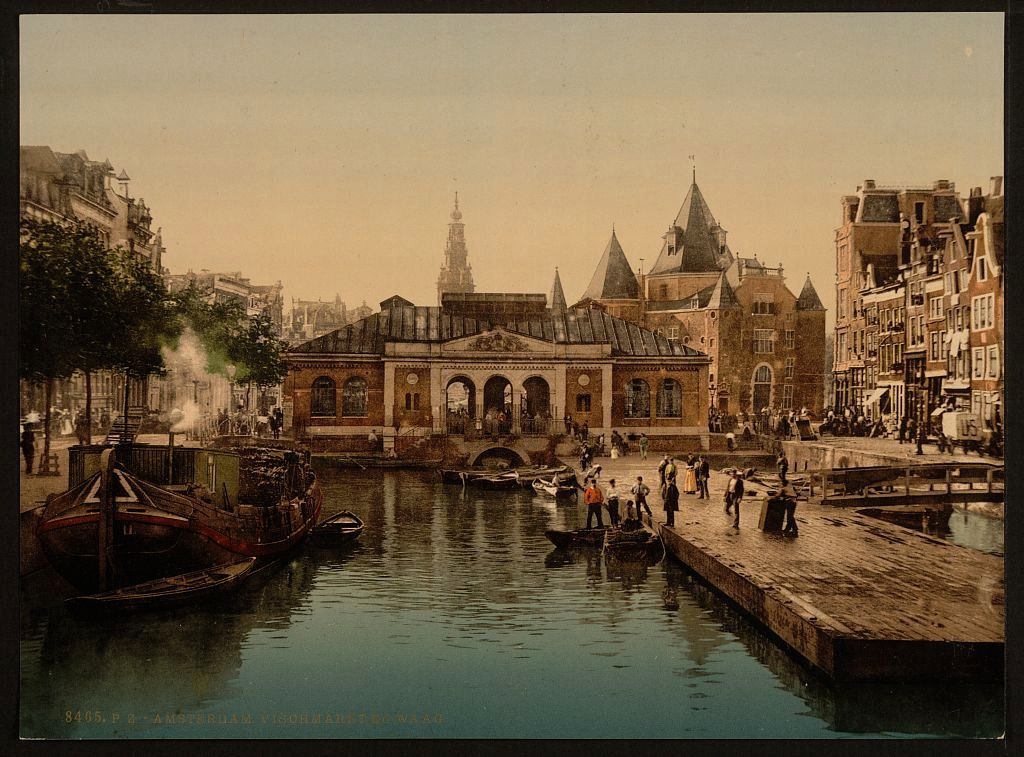
At Nieuwmarkt the old edge of town is easier to recognize. De Waag was once a gate through the walls. The walls moved outward and a square grew around the building. Inside the old towers the city found room for new uses, from weighing goods to housing guild rooms. The waterfront and the gate preserve two very different ways of coming into the old city.
Explore the collection
Search the atlasHistoric buildings
De Waag, the gate Amsterdam kept
De Waag on Nieuwmarkt began as Amsterdam’s Sint Anthoniespoort city gate. It became a public weigh house in 1617, with guild rooms and an anatomy theatre above the scales.
Waterfront buildings
The back doors of the Damrak
Amsterdam’s most photographed waterfront has been showing us the backs of its houses all along.
Market life
A gate in the middle of a market
At Nieuwmarkt, the turrets of De Waag remember an edge of Amsterdam that moved away.


