Trade & city life
Amsterdam’s harbour and market left their marks on the backs of houses, the width of doors and the rooms above them.
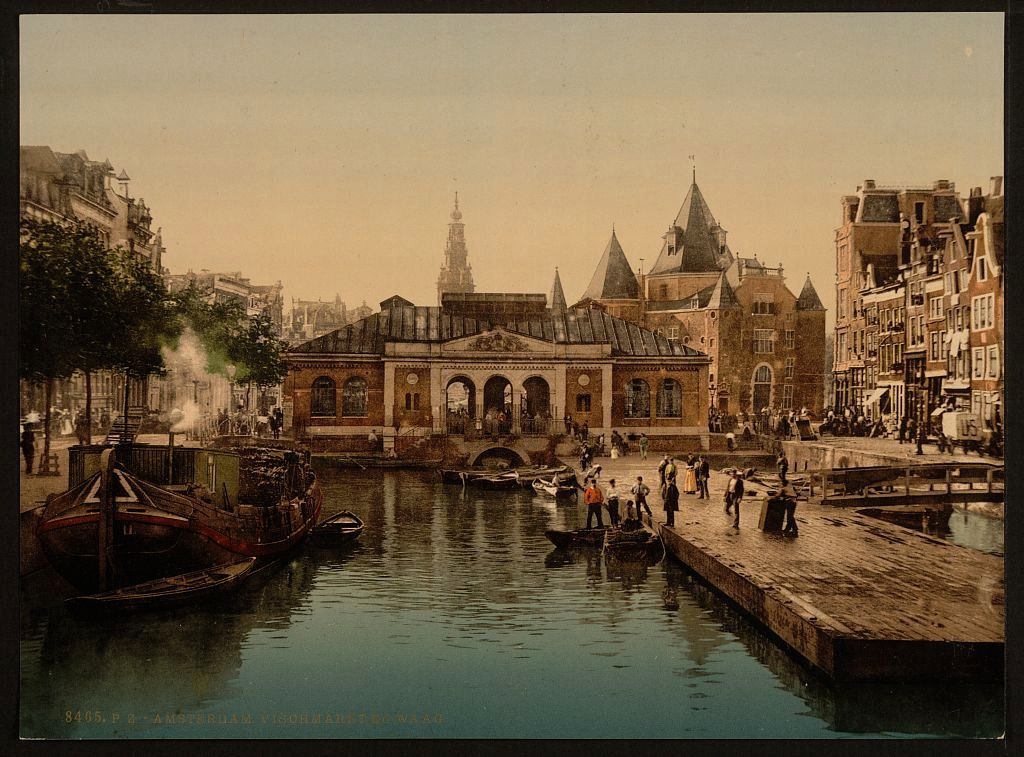
Meet the city where it handled cargo. Along the Damrak, the buildings joined a street to a working stretch of water. On Nieuwmarkt, the broad openings of the converted gate served the public scales. The buildings make visible two steps in the movement of goods through Amsterdam.
The interests of tradespeople extended upstairs. Several guilds had rooms in De Waag, above the scales, and used separate entrances. Read the building from the square up to its roofline to see how much urban life was fitted into a former gate.
Explore the collection
Search the atlas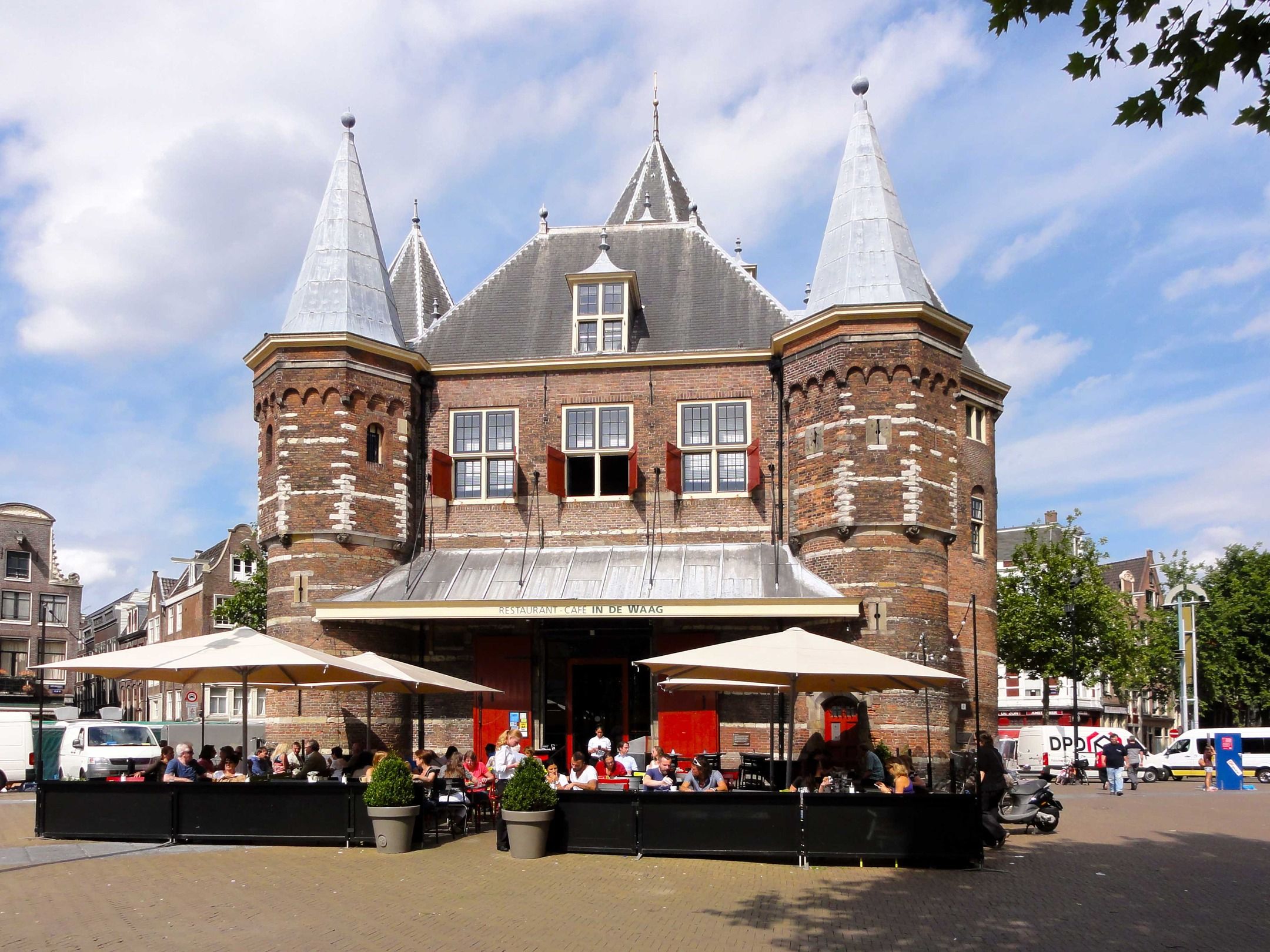
Historic buildings
De Waag, the gate Amsterdam kept
De Waag on Nieuwmarkt began as Amsterdam’s Sint Anthoniespoort city gate. It became a public weigh house in 1617, with guild rooms and an anatomy theatre above the scales.
Waterfront buildings
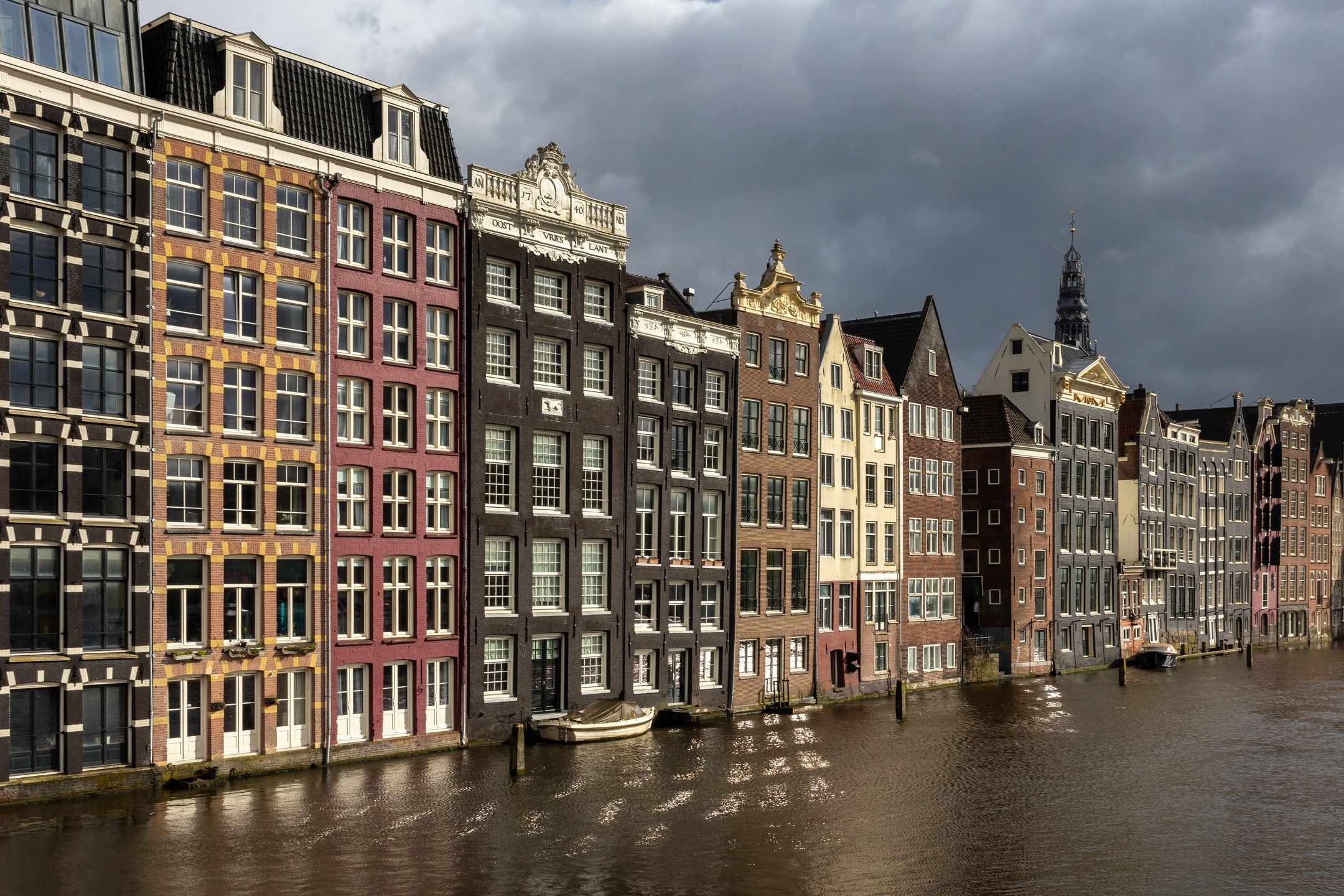
The back doors of the Damrak
Amsterdam’s most photographed waterfront has been showing us the backs of its houses all along.
Market life
A gate in the middle of a market
At Nieuwmarkt, the turrets of De Waag remember an edge of Amsterdam that moved away.


