Old centre to Museum Quarter · On foot
From harbour to concert hall
Walk a cross-section of Amsterdam, from working water to an open cultural square. The Dam, the former mint and the bend of the Herengracht mark changes of direction. Save time at the end to turn around and look back across Museumplein.
3.7 km · About 120 min with stops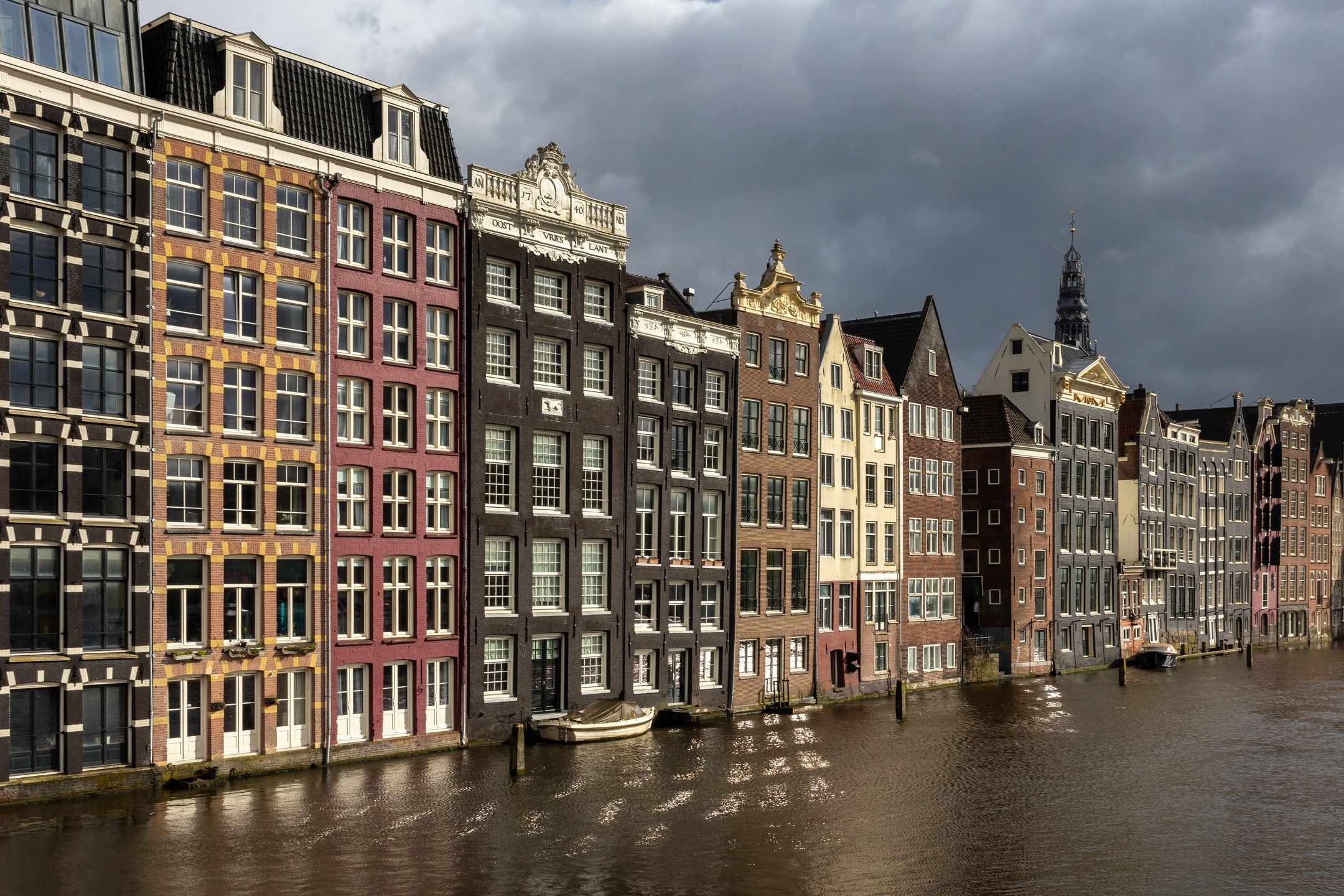
Damrak at golden hour · 24 April 2024 · Basile Morin
Along the way
Damrak, west bank
The Damrak waterfront
Look across the water at the windows set just above its surface. The houses have their street doors on Warmoesstraat. Smaller vessels once brought goods along this reach of the harbour, right to the backs of the warehouses.
Walk 264 m from The Damrak waterfront
- Head southwest along Damrak for 116 m.
- Head southeast along the footpath for 148 m.
Damrak at Beursplein
Beurs van Berlage
Find the clock tower at the end of the long brick exchange. When the building opened in 1903, grain, shares and ship cargoes were among the things traded here. Think of how many different markets those walls had to enclose.
Walk 335 m from Beurs van Berlage
- Head southwest along the footpath for 86 m.
- Head southwest along Damrak for 161 m.
- Head northwest along Dam for 88 m.
Dam square, facing the palace
The palace on the Dam
Stand back in the square and take in the full width of the palace. This was Amsterdam’s town hall. The building a visitor reads today as a seat of royalty once announced the authority of the city government.
Walk 748 m from The palace on the Dam
- Head southwest along Dam for 39 m.
- Head south along the footpath for 12 m.
- Head south along Kalverstraat for 675 m.
- Head south along Muntplein for 23 m.
Muntplein beside the Singel
Munttoren
The tower belonged to a city gate. Look at the base first, then at the clock above it. After a fire in 1618, the city reused the surviving base. The mint that gave the tower its name worked here for only two years.
Walk 407 m from Munttoren
- Head southeast along Muntplein for 56 m.
- Head south along Vijzelstraat for 153 m.
- Head west along Herengracht for 198 m.
Herengracht between Leidsestraat and Vijzelstraat
The Golden Bend
Follow the opposite bank with your eye until the water turns out of sight. This stretch between Leidsestraat and Vijzelstraat is the Golden Bend. Walking it lets you watch a continuous wall of house fronts slowly break into individual plots.
Walk 968 m from The Golden Bend
- Head northwest along Herengracht for 149 m.
- Head southwest along Koningsplein for 9 m.
- Head southwest along the footpath for 30 m.
- Head southeast along Herengracht for 209 m.
- Head southwest along Nieuwe Spiegelstraat for 324 m.
- Head southwest along Brug 69 for 22 m.
- Head southwest along Spiegelbrug for 7 m.
- Head southwest along Spiegelgracht for 141 m.
- Head southwest along Weteringschans for 24 m.
- Head west along the footpath for 54 m.
Museumbrug, looking toward the central passage
Rijksmuseum from Museumbrug
Line up the central opening between Cuypers’ towers. From the bridge the passage reads as a continuation of the street. Two photographs taken along this approach show how the landmark can hold its place even as traffic around it changes.
Walk 485 m from Rijksmuseum from Museumbrug
- Head southwest along the footpath for 136 m.
- Head southwest along Jan Luijkenstraat for 143 m.
- Head south along Hobbemastraat for 84 m.
- Head east along the footpath for 123 m.
Public path on the museum side of the square
Museumplein
Turn back toward the Rijksmuseum. After the enclosed approach from the bridge, the southern side of the building looks out across open ground. Cross the square slowly enough to see the museum change from a destination into a backdrop.
Walk 468 m from Museumplein
- Head southwest along the footpath for 89 m.
- Head southeast along Honthorststraat for 14 m.
- Head southwest along the footpath for 365 m.
Public pavement on the Museumplein side
Concertgebouw
Turn toward the concert hall. When its backers were choosing a plot, the land here lay in fields beyond the city boundary. The building was finished in 1886, but paving, lighting and financing helped delay the opening concert until 1888.